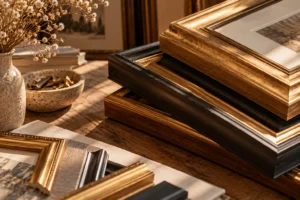
A frame may appear to be a simple decorative border around an artwork, but its purpose extends far beyond appearance.
The right frame can enhance the visual character of a painting, support its presentation and contribute to its long-term preservation.
Framing is both an artistic and practical process. It requires an understanding of materials, proportions, colours and the unique qualities of the artwork.
At Naqshnama Lahore, we believe that thoughtful framing helps complete the story an artwork tells.
Why Framing Matters
Every artwork has its own visual identity.
Some pieces are bold and colourful, while others use delicate details, subtle textures or minimal compositions.
A suitable frame supports these characteristics rather than competing with them.
For example, a simple wooden frame may complement a contemporary abstract painting, while an ornate gold frame may suit a traditional architectural artwork.
Framing can also create a visual transition between the artwork and the surrounding room.
This makes the artwork feel thoughtfully integrated into its environment.
Choosing the Right Frame Style
Frame styles vary in shape, colour, texture and decorative detail.
Minimalist frames often feature clean lines and understated finishes. They are commonly used for contemporary paintings, photography and modern illustrations.
Traditional frames may include carved details, decorative patterns and metallic finishes. These designs can complement classical paintings, heritage-inspired artwork and formal interiors.
Natural wooden frames provide warmth and texture. They can work well with landscapes, botanical illustrations and artworks inspired by nature.
The best choice depends on the artwork itself, the desired presentation and the collector’s personal taste.
The Importance of Colour and Material
The colour of a frame can significantly influence how an artwork is perceived.
Dark frames may create contrast and visual definition, while light frames can provide a softer appearance.
Gold and bronze finishes often introduce warmth and elegance.
Natural wood can create a relaxed and organic feeling.
Materials also affect durability, maintenance and conservation suitability.
It is important to select framing materials that are appropriate for the artwork’s medium and condition.
Understanding Frame Proportions
The width and depth of a frame should complement the size and visual weight of the artwork.
A very heavy frame may overpower a small or delicate painting.
Similarly, an extremely narrow frame may not provide the intended visual balance for a large statement piece.
Professional framing considers the relationship between the artwork, frame and surrounding display space.
Careful measurements and precise construction are essential for achieving a balanced presentation.
Protecting Art Through Framing
Framing can also help protect artwork from certain environmental and handling risks.
Works on paper, photographs and other sensitive materials may benefit from suitable glazing, conservation mounting and protective backing.
UV-filtering glazing can reduce some light-related risks, although it does not eliminate damage from prolonged exposure.
Appropriate spacers and mounting techniques can help prevent direct contact between delicate artwork surfaces and glazing.
Conservation requirements vary depending on the artwork’s materials and condition, so specialist advice may be needed for valuable or fragile pieces.
Custom Framing and Personal Expression
Custom framing allows collectors to create a presentation suited to the exact dimensions and character of their artwork.
Instead of relying on standard sizes and finishes, bespoke framing provides greater flexibility in materials, colours, profiles and presentation details.
It can be particularly useful for unusually sized paintings, photographs, textile artworks and personal memorabilia.
Custom framing also allows collectors to create a consistent visual style across a group of artworks.
Framing as Part of Interior Design
Frames play an important role in the relationship between art and interior spaces.
A carefully chosen frame can connect an artwork with surrounding furniture, architectural details and decorative elements.
In contemporary interiors, understated frames may create a clean and balanced appearance.
In traditional interiors, decorative wooden or metallic frames may complement existing design features.
However, framing should always respect the artwork’s character rather than simply match the room.
The goal is to create harmony between the artwork and its surroundings.
Conclusion
Framing is more than a finishing detail. It is an important part of how art is presented, experienced and preserved.
Through thoughtful material selection, balanced proportions and careful craftsmanship, a frame can enhance the artwork while supporting its long-term care.
At Naqshnama Lahore, we see framing as an extension of artistic appreciation, where every detail contributes to a meaningful and lasting presentation.